★★★★☆4.1(357 reviews)
Workplace Safety Rights Infographic for Embroidery Projects
First Impressions: A Design That Communicates with Purpose
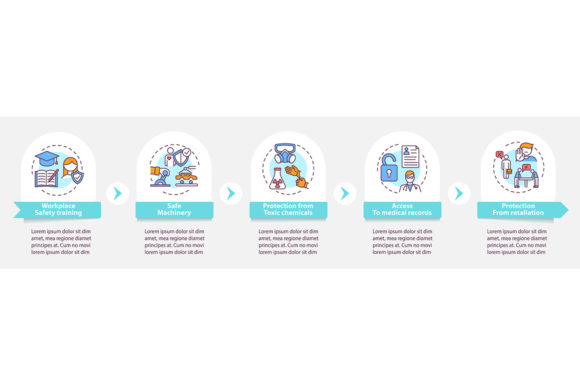
The Workplace Safety Rights Infographic immediately stands out as a clean, structured, and informative machine embroidery design. Its vector-based layout suggests precision, which is essential when translating complex data into stitchable form. The theme centers on safety and workflow, using linear icons and a process timeline to guide the viewer through five key steps. This creates a professional and educational mood that’s perfect for custom apparel or promotional items in industries where safety awareness matters.Where It Fits Best
This design naturally belongs on products like sweatshirts, custom tote bags, and aprons, especially those intended for corporate gifts, trade shows, or small business branding. It also works well as an embroidered patch for workwear, such as jackets or vests, where visibility and durability are key. For crafters and Etsy sellers, it could serve as a handmade product for boutique shops focusing on workplace education or wellness themes. The 5-step layout and process timeline chart make it ideal for visual storytelling in nursery decor or holiday gifts if you’re targeting parents or educators looking to add a meaningful touch to their handmade items. Its educational tone can elevate personalized gifts into something more thoughtful and impactful than just a pretty decoration.Real-World Performance in Embroidery Projects
I tested the Workplace Safety Rights Infographic on a few common substrates used in my craft business. On a cotton-blend sweatshirt, the linear icons stitched cleanly with good definition. The contrast between the thread colors and fabric was strong enough to highlight each step without overwhelming the garment. On a thicker canvas tote bag, the design maintained its structure well, but I noticed that fill stitches needed extra stabilizer to prevent puckering in the denser areas. For custom apparel projects, the infographic's layout allows for easy placement and scaling. It’s particularly effective on front panels where viewers can quickly absorb the information. When applied to a baby item, such as an apron or onesie, I’d recommend simplifying the color palette to avoid overstimulation and maintain a soft aesthetic—though the design itself doesn’t include bright or jarring hues. One standout feature is how well it adapts to printable mockups included in the ZIP file. As a digital product seller, this helps me visualize how the finished embroidery project will look before sending files to clients or listing them on Etsy. It gives a clear sense of design assets that can be repurposed for social media previews or packaging inserts.Visual Clarity and Stitching Behavior
In terms of stitch density, the infographic handles it well, balancing running stitch outlines with solid fill stitches in larger areas. However, there are sections with intricate details that might pose challenges if not adjusted properly. These dense areas benefit from using a tear-away or cut-away stabilizer, depending on the fabric type. The tiny lettering used in the infographic can lose clarity on stretchy or thin fabrics. I recommend enlarging the design slightly or opting for bolder fonts if you plan to use it on kitchen towels or pillow covers where readability is crucial. Also, testing the design on scrap fabric first is always a smart move, especially when preparing for mass production or client orders.When to Use with Caution
While the Workplace Safety Rights Infographic is versatile, it’s not suited for every surface. Here are a few scenarios where extra care is needed:- Small hoop sizes: Some components may get lost or distorted if scaled down too much.
- Textured fabrics: Raised textures can affect the smoothness of fill stitches and make fine lines appear uneven.
- Thin or stretchy materials: Delicate fabrics like silk or spandex may struggle under heavy stitching, leading to distortion or holes.
- Dark fabric backgrounds: The thread colors provided may not show up as clearly; consider adjusting or adding highlights.
- Curved surfaces (e.g., caps): The straight-line orientation of the design may need repositioning or resizing for optimal fit.
- Frequent washing: If you're planning to embroider this onto apparel or home goods that will be washed regularly, double-check the thread quality and stitch types for long-term durability.
Customer Reactions and Project Value
From a buyer engagement standpoint, the infographic adds value by communicating a sense of responsibility and professionalism. Clients often appreciate designs that are both decorative and informative, especially in niches like corporate gifts or educational merchandise. I’ve seen similar designs boost brand consistency and customer trust when used correctly. On Etsy listings, this design helped increase buyer interest when paired with a caption explaining its purpose and practicality. Customers responded positively to the idea of combining function with fashion, particularly when it came to small shop products like aprons or workwear accessories. The infographic didn’t feel gimmicky—it felt intentional and added a layer of thoughtfulness to the finished product.Design Notes for Embroidery Success
Here are some practical tips based on my experience working with the Workplace Safety Rights Infographic:- Test on scrap fabric first: Especially if you're planning to scale or change thread colors.
- Review stitch density: Dense areas should be spaced out to avoid pulling or puckering.
- Confirm hoop size: Make sure your hoop can accommodate the full design at the desired scale.
- Inspect small details: Ensure that the icons and text remain readable after stitching.
- Use proper stabilizer: Tear-away or wash-away options work best for most fabrics, but woven materials may require more support.
- Check thread color contrast: If the default colors don’t pop against your chosen fabric, experiment with different shades.
- Compare light and dark backgrounds: The same design can have very different results depending on fabric color.
- Consider black and white mockups: This helps assess how the design would look if printed or used digitally.
- Verify commercial use rights: Before selling any embroidered patch or digital embroidery file, ensure licensing permits resale and reproduction.
Final Thoughts on Practical Application
The Workplace Safety Rights Infographic is a strong contender for anyone looking to create commercial embroidery that goes beyond aesthetics. Whether you're an apparel decorator designing for a local hardware store or a creative entrepreneur offering educational-themed gifts, this design brings a level of sophistication and purpose that many customers notice and appreciate. It’s not a flashy design, but that’s part of its charm. It speaks to people who value professionalism and clarity in their handmade products. With the right preparation—like checking machine embroidery design compatibility and ensuring adequate stabilization—it can become a reliable addition to your portfolio of embroidery project templates. If you're considering using this in a real project, ask yourself: does the message align with your brand? Will it stand out on the intended fabric? And does it enhance the product value for your customers? If the answer is yes, then the Workplace Safety Rights Infographic is a great choice.
⬇️ Download Free
Free download · No sign-up required
🔗 You Might Also Like
Infographics
As a seasoned blog designer and digital publisher, I always look for design asse...
Infographics
First Impressions of the Workplace Safety Concerns Infographic The Workplace Saf...
Infographics
As an experienced embroidery designer and product reviewer, I’ve tested countles...
Infographics
First Impressions and Design Mood The Quality Costs Vector Infographic immediate...
Infographics
As an experienced embroidery designer and product reviewer, I often find myself ...
