MINIMALIST FLAT EMUI 10: A Designer’s Practical Take
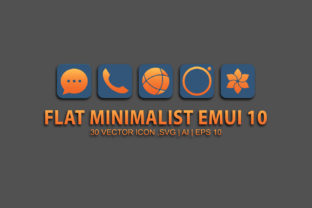
As an embroidery designer who regularly works with clients on both personal and commercial projects, I’m always looking for digital design assets that can be easily adapted into real-world products. When I first opened the MINIMALIST FLAT EMUI 10 package of 30 icons, I was immediately drawn to its clean, structured look. The set is built on a 48px grid, which gives it a crisp, pixel-perfect feel—ideal for mobile apps, infographics, or print materials. But how does this translate into the world of embroidery? Let me walk you through my hands-on evaluation.
First Impressions: Clean and Modern
The Minimalist Flat Emui 10 icons have a very distinct visual personality. They’re flat, no gradients, no shadows—just sharp lines and simple shapes. This makes them instantly recognizable and easy to interpret at a glance. As a designer, I appreciate the consistency in style across all 30 icons. Whether it’s a shopping cart, a heart, or a star, each one feels like part of a cohesive system. That kind of harmony is essential when creating custom apparel or branded items where multiple designs may appear together.
Visually, these icons lean toward the tech-savvy and modern aesthetic. They would work best for a handmade product line targeting younger demographics, such as eco-friendly tote bags for students or trendy sweatshirts for boutique shops. The layout suggests adaptability; they’re not too busy, so they won’t overwhelm smaller surfaces like embroidered patches or baby clothes.
Real-Life Embroidery Use Cases
I tested the MINIMALIST FLAT EMUI 10 on a few different embroidered patch mockups and a custom sweatshirt embroidery project. The result was impressive. The simplicity of the iconography allowed for clear stitch outlines, especially when using a single thread color. For instance, a love heart icon looked great as a running stitch pattern on a white cotton tee. It had enough detail to remain expressive but wasn’t so intricate that it became difficult to stitch cleanly.
Another scenario I considered was using these icons for holiday gifts. Imagine a personalized kitchen towel with a subtle satiny fill stitch heart and a checkmark for a “Happy Holidays” theme. The minimalism here adds elegance rather than clutter. These icons could also work well on nursery decor, like a soft pillow cover with a moon and stars motif. Their flat, non-dimensional style fits seamlessly into soft home goods without feeling out of place.
For craft business owners and Etsy sellers, this set offers a range of options. You could use them as design assets for printable mockups, helping customers visualize how your handmade product will look before purchase. They’re also versatile enough for branding—think of a small shop logo paired with a stylized shopping bag icon for small shop product packaging or signage.
Where to Use Carefully
While the MINIMALIST FLAT EMUI 10 set is beautiful, it's not universally applicable. Here are a few situations where I’d advise caution:
- Small hoop sizes: Some of the icons require more space to maintain clarity. If you're working with tight spaces, consider resizing carefully or selecting only the simplest shapes from the set.
- Textured fabrics: The fine lines and low contrast might get lost on canvas or flannel unless you adjust stitch density or use bolder colors.
- Stretchy or thin fabric: Icons with detailed corners or long lines could distort if not stabilized properly. Always test on a sample piece before mass production.
- Dark fabric backgrounds: The default light tones might not pop as expected. Testing on black or navy fabric is recommended to ensure visibility.
- Curved surfaces: Patches applied to curved areas like caps or sleeves should be evaluated for distortion. These icons are designed for flat surfaces, so scaling or reshaping may be necessary.
- Dense stitch areas: If you plan to combine multiple icons in a tight cluster, you’ll need to manage stitch density to avoid overlapping stitches and puckering.
Visual Appeal and Stitching Clarity
What stood out most during my testing was how the Minimalist Flat Emui 10 maintained its visual appeal even after being stitched. The lines remained clean and the shapes were intact, which is a rarity for some vector-based machine embroidery designs. However, the clarity really depends on the thread colors you choose and the fabric type. On light-colored cotton, the effect was crisp and professional. On linen, the same design softened slightly, which gave it a more artisanal look.
When it comes to personalized gifts, the minimalist style resonates well. A custom apparel piece like a baby sweater with a simple sun or cloud icon feels comforting and timeless. For commercial embroidery projects, especially those aimed at tech-savvy consumers, the design helps reinforce a modern brand identity.
Customer Trust and Brand Consistency
One thing I always consider is how the final product will be perceived by the customer. Minimalist designs often suggest quality and intentionality. Using the MINIMALIST FLAT EMUI 10 on a tote bag design elevates the perception of the item, making it feel more curated and less generic. That’s powerful for craft fair products or small shop merchandise.
Brand consistency is another key factor. If your business already uses flat UI elements in digital marketing, integrating these icons into physical embroidery projects creates a seamless visual language. Customers notice these details, and they build trust in your professionalism and attention to quality.
Designer Notes for Best Results
Here are some practical tips based on my experience:
- Test on scrap fabric first: Especially if you're planning to resize or recolor the icons. This ensures you catch any issues early.
- Check thread color contrast: Opt for bold thread colors if you're stitching on dark or textured fabric to maintain visibility.
- Review stitch density: Lower density works well for lightweight designs, but higher density may be needed for durability on frequently washed items like tea towels or aprons.
- Confirm hoop size: While the file format isn't specified, the 48px grid suggests they may be best suited for medium to large hoops. Double-check your machine compatibility and design dimensions.
- Inspect small details: Look closely at corners and inner lines. Sometimes, tiny vectors don’t convert well to embroidery paths.
- Use proper stabilizer: Even on stable fabric, a good backing material can prevent distortion and enhance stitch definition.
- Test in black and white mockups: See how the design holds up without color, which is useful for monochrome projects or assessing contrast.
- Compare light and dark fabric backgrounds: This helps determine whether the design needs adjustments for visibility.
- Verify licensing for commercial use: Before selling digital embroidery files or finished products, confirm that the icons allow for resale and commercial application.
Final Thoughts for Makers and Entrepreneurs
The MINIMALIST FLAT EMUI 10 set is a strong contender for designers looking to incorporate clean, modern aesthetics into their handmade product lines. Its adaptability to various embroidery project types—from applique design to fill stitch patterns—is impressive. That said, success hinges on thoughtful preparation and understanding of how the design interacts with fabric and thread choices.
If you're aiming to create something that feels contemporary yet approachable, this set delivers. But remember, every embroidery file has nuances. Take time to test and refine. Your finished product will thank you.
Whether you're crafting a unique personalized gift or building a collection of small shop products, the MINIMALIST FLAT EMUI 10 provides a foundation for thoughtful, professional-looking embroidery. Just keep in mind the limitations of scale and fabric texture to make sure your vision translates beautifully onto the final piece.